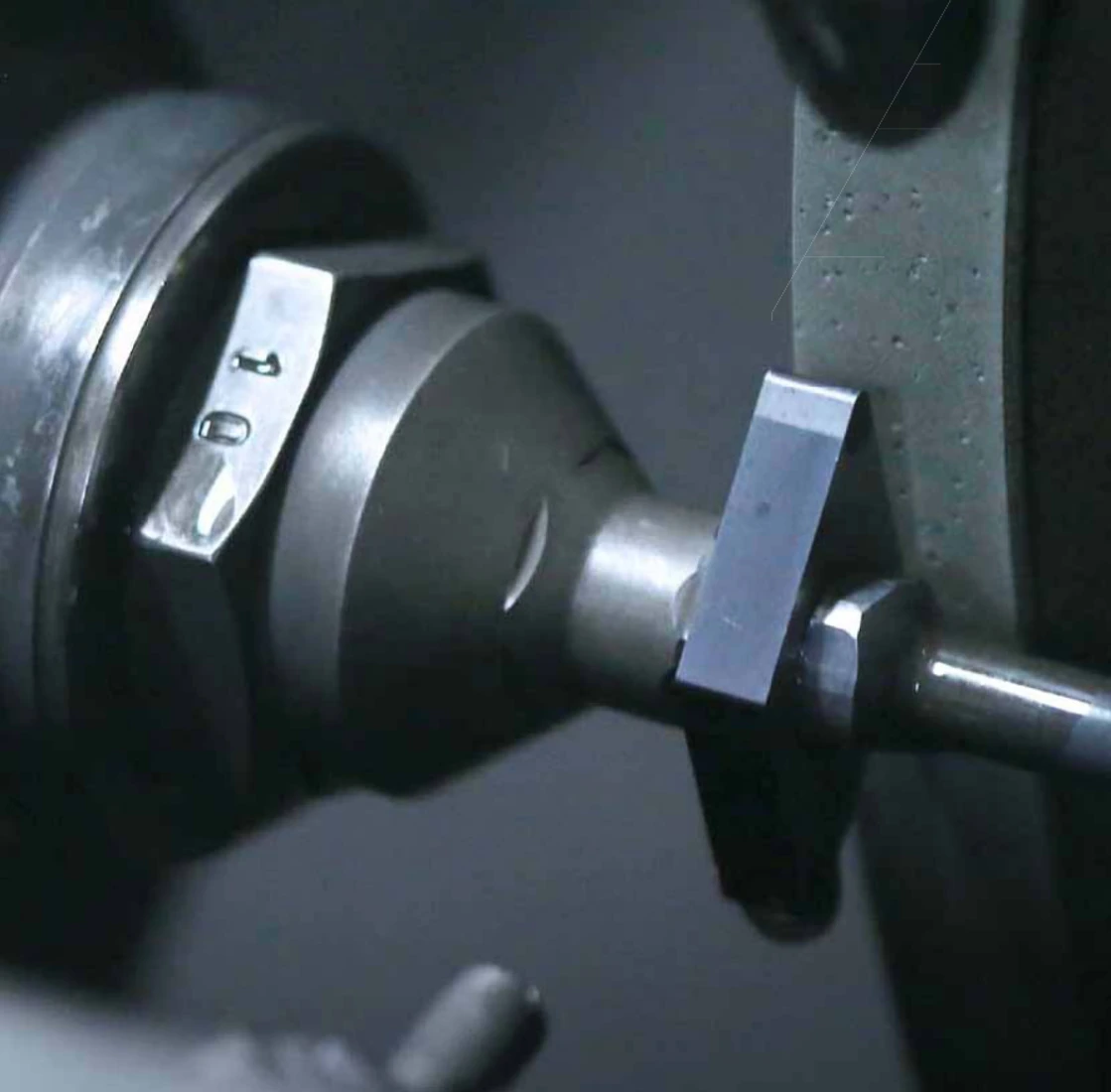
Separate the grinding wheel and cutting tool
In this application, the cutting insert is the workpiece. EHWA describes grinding wheels for machining its contour, top and bottom surfaces, and cutting edges. The "Cutting Tools" catalogue excerpt also covers rotary cutting tool manufacture and grinding of tipped saw blades.
Tool design starts with insert material and machining surface. Carbide, ceramic, cermet and PCD/PCBN materials are explicitly named. The material of the insert being ground must be distinguished from the abrasive and bond of the grinding wheel.
Surfaces and tool families
| Workpiece or surface | Tool solution described | Quality objective |
|---|---|---|
| Insert periphery | Peripheral grinding wheels | Contour, edge quality and small chips |
| Insert top and bottom | Face grinding wheels | Dimensional stability and surface quality |
| Carbide drills and endmills | Wheel packs, including hybrid bond | Flutes, clearance surfaces and cutting geometry |
| Micro rotary tools | Precision wheel packs | Fine surfaces and stable cutting edges |
| Carbide-tipped circular saws | Tool grinding wheels | Flank, top and face grinding |
Bond, removal and edge quality
The catalogue describes resin and hybrid bonds for peripheral grinding, and dedicated designs for PCD/PCBN inserts. Selection connects grinding performance, dressing interval and edge chipping. Face grinding adds dimensional stability and machining of the insert surfaces.
For rotary tools, the source explains polyimide and hybrid bonds. A porous hybrid structure is described in relation to grain protrusion, grinding fluid access and reduced grinding load. These benefits belong to the specific grinding task and are assessed using the required cutting edge and tool geometry.
Improved cycle time is useful only alongside dimensional accuracy and edge quality. Process comparison therefore considers removal, feed, chipping and useful machining time between dressing operations together.
Two separate peripheral grinding examples
PDF page 4 of the catalogue excerpt contains two different applications:
| Example | Machine | Wheel speed stated |
|---|---|---|
| Carbide insert | Wendt 715 WAC Quattro | 20 m/s |
| PCBN insert | Agathon | 18 m/s |
The source gives different wheel specifications and bonds. The speeds therefore belong to their respective examples and are not harmonised operating instructions. Selection requires a complete match of wheel drawing, insert material, machine and dressing process.
Your technical enquiry
Send a drawing, material designation, machine and mounting details, and the intended result. For existing processes, the current tool specification, machining data and a description of the wear pattern help. Mention the topic and relevant catalogue page. We discuss the tool design and next steps with you.
EHWA Europe GmbH
Sources and complete catalogues
- Cutting Tools - wheels for inserts and cutting tool manufacture, PDF pages 3-7; printed pages 42-46; HQ source.
This thematic overview is a compact introduction to these applications. The linked original catalogues contain further designs, tables and technical information.